Is Juicing Really Beneficial for our Health?
Juicing has become super popular as a way to cleanse the body, lose weight, and increase our intake of vitamins and minerals. It’s always a good idea to look at the science behind a health trend, so just how healthy is juicing?
On the one side of the juicing trend, we have a lot of marketing effort. If fruits and vegetables are good for you and your body, then drinking them in one big glass full each day must surely be of benefit?
However, the science behind it is more complex than the marketing efforts, and the reality is a tale of both pros and cons that are well worth considering before integrating juicing into a diet regimen.
The Pros of Juicing
Many people juice fruits and vegetable on a daily basis without thinking too much about the nutritional value and science behind it.
In this spirit, here are some of the health benefits of juicing:
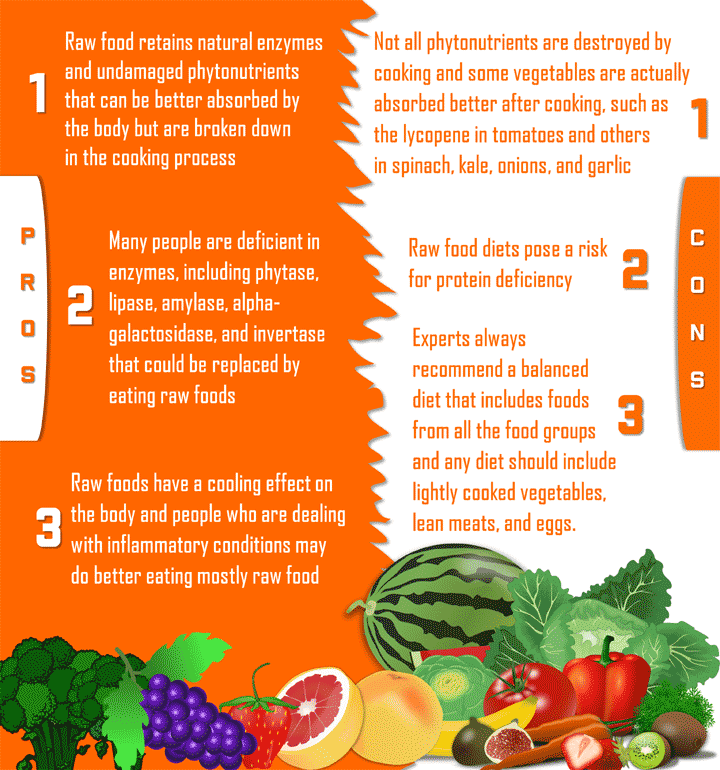
- If your daily diet is poor to begin with, then juicing even on a semi-regular basis can provide your body some much needed nutrition. The striping away of much of the fiber content in fruits and vegetables by the pulverization process makes it easy for your body to absorb the nutrients faster, thus giving you a high dose of nutrients. These nutrients contribute to your overall health and well-being and boost your immune system.
- The pulverization of much of the fiber also unlocks some of the enzymes found in some fruits and vegetables and makes them available for digestion and absorption.
- If you juice regularly you’re habituating yourself to a dietary activity that is actually of great benefit. You’re thinking of your body, your health and what you’re putting into your body, and developing this habit is of massive psychological benefit, particularly for those who have had previously poor eating habits.This healthy change in habit can lead to other positive life changing activities, including regular exercise and eating more foods of greater nutritional value. Many of us don’t eat enough fruit and vegetables on a daily basis, so drinking even one small cup of freshly juiced vegetables and fruits can help our bodies.
The Cons of Juicing
Despite the strong marketing line, juicing has quite a couple of pitfalls. Much of the nutritional science behind it is still being debated in diet circles, but there are some very specific problems that are slowly becoming more well-known. Read on to find out some of the cons of juicing to put the debate into a sharp perspective:
- Juicing fruits and vegetables actually strips away most of the insoluble fiber content due to the pulverization process. Eating fiber regularly is essential to a smooth digestive process, and helps us to maintain a healthy weight because it causes us to feel fuller for longer.
- As our bodies absorb a super hit of nutrition due to the stripping away of much of the fiber, we also absorb a lot of natural sugar, this is especially critical when juice blends consist mostly of fruits. This creates an abnormal spike in sugar levels, which is clearly problematic for diabetics and promotes weigh gain. Over time, this excess of fructose sugar will cause us weight problems as they are converted to fats and stored by our bodies. In this way, regular juicing will have the opposite of a beneficial health effect. However, it is important to note that this sugar overload only occurs when fruit is the predominant ingredient, when you juice a ratio of 80% to 20% or 90% to 10% of vegetables to fruits this is not a problem.
Some Thoughts on the Health Benefits of Juicing
It seems as though juicing is here to stay, at least for the near future, but it’s wise to consider both the pros and cons behind it. To supplement an already poor diet, drinking juice can offer superior nutritional and health benefits. Keep in mind, we still need to eat real foods and chewing is an important part of eating.
[color-box color=”yellow”]Download 50 Juicing Tips right now! 
[/color-box]
A Few Tips for the Newbie Juicer
Any time of the year is a good time to start juicing. The health benefits of drinking fruit and vegetable juice are numerous, ranging from improving your digestive health to increasing your body’s ability to repair itself and bolstering your immune system. However, as with any new routine, sticking to your juicing habit can be hard.
Follow these 8 tips to help make juicing a part of your daily routine for years to come.
1. Invest in a quality juicer
This one falls in line with the whole concept of making the process easier for you. A poor quality juicer can result in a poor quality juice, such as one full of large chunks, which in turn can make the entire process unappealing. Cheap juicers are also more prone to breaking and clogging, which can completely stop your budding love for juicing in its tracks. There’s no need to spend a fortune on a juicer, as some high-end models also come with issues.
Here is our pick for the best beginner juicer! —> 

2. Set up a juicing plan
One of the most common mistakes people make when starting a juicing lifestyle is failing to account for the extra effort. In order to make your juice both effective and sanitary, you need to wash your ingredients and cut them to the appropriate size for your machine. Most people don’t have the time to do this in the morning, so consider prepping the night before. Even if you chop up all of your veggies and fruits the night before, you still need to plan for the time to make the juice and clean your machine in the morning. Wake up a few minutes earlier to give yourself more time in the morning and keep the process as stress-free as possible.
3. Stock up on the (right) ingredients
Another pitfall that leads new juicer to abandon the process is a simple lack of ingredients. If you’re all ready to make your juice, but you don’t have any leafy greens or fruits, it makes the entire process harder than it needs to be. Make sure you keep a fresh supply of fruits and vegetables in your fridge before you plan to make you juice so that you can focus on solidifying the habit instead of the obstacles in front of you.
4. Solve the taste dilemma
Make sure you choose ingredients that are both easy to juice and that you enjoy. Even though kale is loaded with nutrients, you’re unlikely to stick to juicing if you hate the taste, but there are many tasty additions that can help mask the taste of kale, so you can get the nutrients while enjoying the juice. Apples, lemons, limes, grapefruits, pears, and ginger are all great additions to make the primary stars, like spinach, kale or broccoli taste great in your juice. It is also important to realize that you might just have to get used to the taste of vegetables, as others have, it is part of changing to a healthy lifestyle.
5. Focus on your calorie intake
As great as juices are for your health, they’re no replacement for actual fruits and vegetables. Many new juicers attempt to substitute complete meals with a juice blend, which often does not have the appropriate number of calories to keep you fueled all day. Similarly, many people find that drinking fruits and vegetables is not as satisfying as eating them, which can lead to feelings of hunger. Associating negative feelings such as fatigue and hunger with drinking juice can make you feel like the process isn’t worth it. Instead, focus on drinking the juice as a snack or meal supplement.
6. Easy Storage
Buy an airtight container to store your juice. Juice keeps well for about 3 days, so being able to make enough for a few days saves time and makes the whole juicing thing much easier.
7. Watch your sugar intake
Avoid the shock of weight gain or sugar overload that can quickly turn you off to juicing by making your juices primarily from vegetables. Fruit is very high in sugar, and you can easily go into calorie and sugar overload with just a couple of glasses a day, negating the whole point of juicing. Choose low sugar fruits, like apples and berries and use them in moderation.
8. Buy a portable container
One major benefit of drinking juice blends is that they take such little time to consume. However, if you don’t have the time to sit and sip your drink, you’re not going to build the habit into your routine. Purchasing a thermos or other container means you can take your juice with you wherever you go, so drinking it can become a part of your daily activities. In addition, you can make your juice in the morning and then take it with you to work to drink later. Starting a new juicing routine can be difficult if you don’t take the time to plan for it in advance. Focus on identifying the biggest issues you face each day and develop methods to overcome them, and you’ll make your new juicing habit stick for a lifetime.